Scientists at Osaka University in Japan have identified a protein that functions as a master regulator in cellular aging, potentially opening new doors for age-reversal treatments. This protein, known as AP2A1, appears to control whether cells remain youthful or enter senescence—a state where cells stop dividing but don't die off.
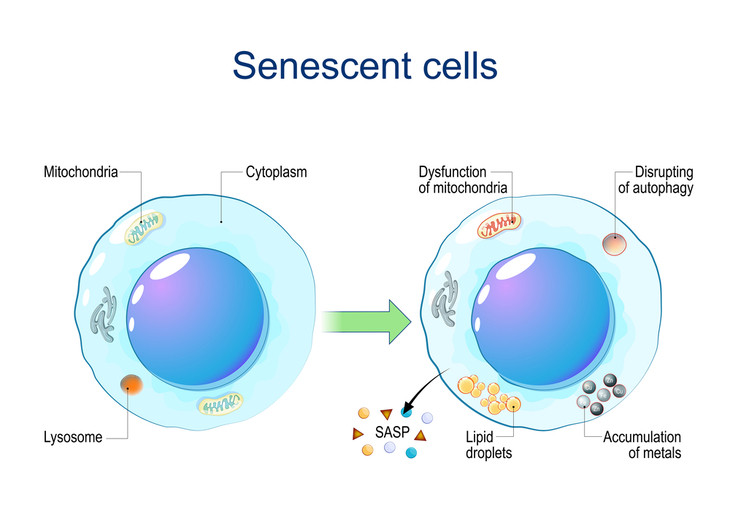
The research centers on what happens to human cells during the aging process. As people grow older, their bodies accumulate "senescent" cells that have ceased dividing. These zombie-like cells grow abnormally large, produce inflammatory compounds, and contribute to numerous age-related diseases from arthritis to Alzheimer's disease.
What makes this discovery particularly remarkable is how manipulating just this one protein produced dramatic results. When researchers reduced AP2A1 levels in senescent cells, many aging markers reversed—the cells shrank to normal size, began dividing again, and displayed other youthful characteristics. The opposite occurred when they increased AP2A1 in young cells, causing them to prematurely develop aging traits.
Understanding Cellular Senescence
Cellular aging isn't a random process. In
the 1960s, scientist Leonard Hayflick discovered that human cells can
only divide approximately 50 times before permanently stopping—a
limitation now known as the "Hayflick limit." This represents a
fundamental aspect of how cells age.
When cells become senescent, they undergo
major transformations. They can swell to six times their normal size and
develop distinctive internal structures, particularly thick "stress
fibers"—protein strands that stretch across the cell like support beams.
Senescent cells also produce less protein, move more slowly, and
express specific genes associated with aging.
Researchers noted that one puzzling aspect of senescent cells is how
they maintain their enormous size. The unusually thick stress fibers
found in aging cells provided an important clue that led to their
breakthrough.
The Research Pathway
The Japanese team made their discovery by comparing young human skin
fibroblasts (cells that produce collagen) with older ones that had
become senescent. Among many differences, they found senescent cells
contained much higher levels of AP2A1.
AP2A1 (alpha 1 adaptin subunit of adaptor protein 2) mainly functions in
clathrin-mediated endocytosis—essentially the cell's recycling system
for bringing materials inside. Until this study, no one had connected
this protein to the aging process.
In their most compelling experiments, researchers used RNA interference
to reduce AP2A1 levels in old cells. The results were striking—cells
became smaller, their stress fibers thinned, they resumed division, and
showed decreased expression of aging-related genes. Essentially,
lowering AP2A1 rejuvenated the cells.
In the opposite experiment, increasing AP2A1 in young cells caused them
to develop aging characteristics: they grew larger, developed thicker
stress fibers, slowed their division rate, and expressed genetic markers
of senescence.
The Mechanism Behind Cell Aging
The researchers discovered that AP2A1
regulates how cells attach to their surrounding environment. Cells
connect to their surroundings through structures called focal adhesions
that act like anchors. In senescent cells, these focal adhesions become
abnormally large and strong.
AP2A1 apparently helps transport a protein
called integrin β1 along stress fibers to build and maintain these
enlarged focal adhesions. The enhanced anchoring explains why senescent
cells maintain their abnormally large size.
The research team confirmed that AP2A1 levels increase in various types
of senescent cells, not just those reaching the end of their replicative
lifespan. When they exposed young cells to ultraviolet radiation or
drugs that induce senescence, AP2A1 levels rose dramatically, suggesting
this protein's increase is a universal feature of cellular senescence
regardless of the cause.
Implications for Medicine and Longevity
This discovery opens exciting possibilities
for anti-aging medicine. Developing drugs that inhibit AP2A1 or its
pathways might rejuvenate senescent cells in the body, potentially
slowing or even reversing aspects of aging. This approach could be
valuable for treating age-related diseases characterized by senescent
cell accumulation, such as osteoarthritis, cardiovascular disease, and
neurodegenerative disorders.
The findings, published in Cellular Signalling, extend beyond simply
understanding aging. Senescent cells play complex roles in our
bodies—while they contribute to aging and related diseases, the
senescence process also helps prevent cancer by stopping potentially
dangerous cells from dividing. Any intervention targeting senescent
cells would need to balance these considerations carefully.
Applications of this research could reach beyond anti-aging treatments.
Understanding how cells control their size and shape might help develop
new approaches to treating diseases characterized by abnormal cell
growth, such as cancer. It could also provide insights into wound
healing, where fibroblasts play crucial roles.
As a key regulator of senescence and rejuvenation, AP2A1 has been
identified as a promising new target for promoting cellular health and
longevity. The researchers identified AP2A1 as both a valuable biomarker
and a potential therapeutic target for cellular rejuvenation.
In the complex puzzle of aging, the discovery of AP2A1's role represents
a major advance, revealing a central control point coordinating
multiple aspects of cellular aging. By manipulating this one protein,
researchers may have found a way to instruct cells whether to behave
young or old—essentially giving them the power to rewind the cellular
clock.
T